
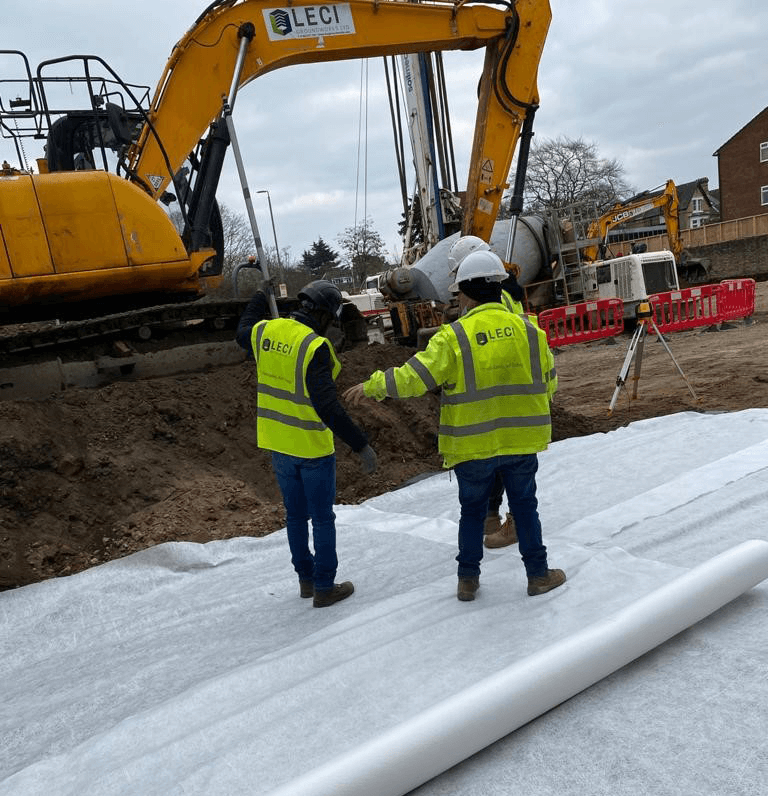
Groundworks are often assumed to be a straightforward stage of construction. In reality, many project delays originate at this early stage, particularly where coordination and sequencing are not fully aligned.
Common Questions
– Why do delays often start during groundworks?
– Is this typically a design issue or a site issue?
– What are the most common causes on residential projects?
Delays during groundworks are often the result of multiple factors coming together at the same time. Unlike later stages of construction, early works involve setting levels, installing drainage, managing site conditions, and coordinating access all at once. If these elements are not properly aligned from the outset, even small discrepancies can quickly affect progress and disrupt the wider programme.
In most cases, the issue is not solely down to design or site execution, but the interface between the two. Designs may be technically sound, but if they are not fully coordinated with site conditions or sequencing, they can become difficult to implement efficiently. This often results in adjustments being made on site rather than resolved before work begins.
On residential projects in particular, the most common causes tend to be changes in levels, drainage conflicts, access constraints, and a lack of clear sequencing between trades. These issues are rarely critical in isolation, but when combined, they can slow progress and introduce avoidable rework.
A more coordinated approach at the early stages, with a clear understanding of how design intent translates into site delivery, can significantly reduce these issues and help maintain programme certainty.
Common Questions
– Can these issues be avoided with better planning?
– Does early contractor involvement make a difference?
– Why do these problems tend to repeat across projects?
Many of these issues can be reduced through a more considered level of planning at the outset, although they cannot always be eliminated entirely. Early-stage construction involves a number of variables, including site conditions, sequencing, and coordination between different trades, all of which require alignment before work begins. Where there is clarity around these elements, projects tend to progress more smoothly and with fewer interruptions.
Early contractor involvement can play a valuable role in this process. Practical input at the planning or pre-construction stage can help identify potential challenges that may not be immediately apparent from drawings alone. This can include considerations such as access, drainage installation, sequencing, and how different stages of work interact on site. Addressing these points early reduces the need for reactive decision-making once works are underway.
Despite this, these issues continue to repeat across projects, often due to time pressures, fragmented responsibilities, and a tendency to treat early-stage works as straightforward rather than critical. In many cases, assumptions are made that details will be resolved during construction, rather than fully coordinated beforehand.
A more structured approach, with greater emphasis on planning, communication, and early coordination, helps minimise these risks and supports more consistent project outcomes.
Groundworks set the conditions for the entire project. A more structured and coordinated approach at this stage leads to more reliable outcomes and fewer issues later in the build.